Tuesday, October 12, 2010

Canstruction


This blog would like to send its congratulations to Waterloo Architecture Student Association, of Waterloo, Canada for winning this year's Canstruction Best Meal Category! Ave! Ave! Ave! This model of the Parthenon is built completely out of canned food, that all went to charity.


Canstruction, Inc. is a registered 501(c)(3) nonprofit organization that holds annual design and build competitions to construct fantastic, giant sized, structures made entirely out of canned food. In each city after the structures are built and the winners declared the creations go on view to the general public as giant art exhibits. At the close of the competitions all of the food used in the structures is donated to the local food banks for distribution to community emergency feeding programs.

Monday, October 11, 2010

Asparagus, and Coriander Crusted Fish

I gotta tell you, I am having a lot of fun writing for this blog. 
Tonight, I tried out two more recipes from Apicius.

The first dish wasn't so much as a recipe, but a technique for cooking asparagus. Usually, when I've cooked asparagus, I've either steamed it, or boiled it. I had never thought of doing it Apicus' way. In de re Coquinaria, Apicius tells us how to prepare asparagus


"Asparagus: in order to have it most agreeable to the palate must be peeled, washed and dried and immersed in boiling water backwards." (Apicius, 3, 3, 72)


cooking the asparagus
When Apicius says to immerse it in boiling water "backwards," he means to have it so that the stalks of the asparagus are underwater, and the tips are poking out of the water. This way, the stalks are boiled and cooked, and the fragile flower tips of the asparagus are spared from the boiling water. In order to do so, I cooked the asparagus in an old coffee can, which allowed me to have them easily stand upright. I didn't have any other pots that were deep and skinny enough to accommodate this. 


This worked out perfectly! The asparagus were delicious! Yum! The tips were relatively uncooked, and the stalks were cooked to perfection. 


Next, I cooked "Fish in Coriander Crust."


"Prepare the fish carefully, put in a mortar salt and coriander seed, crush finely, roll the fish in it, put in a baking dish, cover, seal, bake in the bread-oven. When cooked, remove, season with very sharp vinegar and serve"  (Apicius 10, 1, 4)


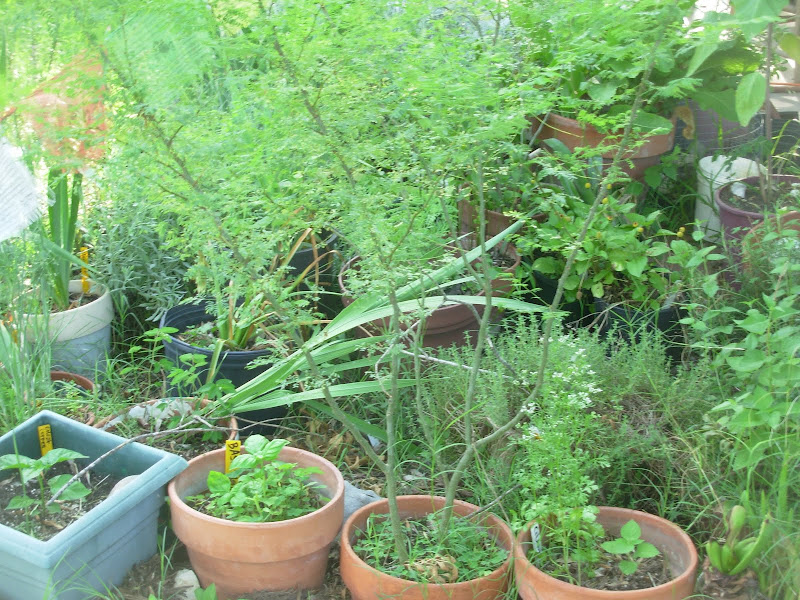
I used two tablespoons of coriander seeds, which I got from my gardening supplies. It's really nice that the Romans were so fond of coriander (cilantro), which is so ubiquitous in South Texas cooking. I had grown cilantro in my garden that had gotten out of control, and had harvested the seeds to share, and to plant next season. I cleaned them up, and roasted them on my skillet for 2 minutes at high heat, stirring constantly. I tossed them in the mortar and pestle, and ground them down with 1 teaspoon of salt. 


Grinding the coriander & salt
Now, this recipe might not be the most authentic, as I used salmon for the fish. The Classical Cookbook recommended cod, plaice, or haddock, but I really like salmon, and it was on sale, so I picked salmon. I know, I know, the Romans didn't have salmon, as far as I can figure this may not be the most authentic dish, but we're testing the coriander crust, not the fish itself. So, I rolled the fish around in the mixture of ground up seeds and salt, and put it in a pan with a dash of olive oil so it wouldn't stick, and covered it. I baked at 375F. The cookbook recommended 15 minutes, but it wasn't nearly ready then. It was ready by 25 minutes. Reader, one of the hardest parts of cooking is making everything ready simultaneously. It's difficult to have the meat cooked when the veggies and all other dishes are ready, and this time I failed at it because of the extra time needed to cook the fish. Therefore, I ate the asparagus first, since they were ready first, and then after another 10 minutes or so, had the fish. 
After taking the fish out of the oven, I sprinkled it with white wine vinegar. I had a little sticking in the pan, but it looked beautiful! 


The fish fell apart a bit because it stuck to the pan.
The fish was wonderful! I'd never put white whine vinegar on salmon, but it worked out quite well. The coriander acted as a breading, it was absolutely delicious! I would make this dish again in a heart beat! Nom Nom Nom! The coriander was a delightful contrast to the white wine vinegar. The dish probably wouldn't have worked as well without the white wine vinegar, which added a tartness that was a nice contrast to the herbal earthiness of the coriander crust. 


In all, this meal was a success. Both recipes were quite easy to make, and the ingredients were easy to obtain. I only wish I had known that the salmon would have taken longer to cook. I served the  Roman dishes with enriched white rice, which was a nice pairing. 


Silphium Asafoetidaque

Ecce! Hic Spartacurtus est! 
How the asafoetida is packaged
Today I happened to be in an Indian grocery, and found asafoetida powder, an ancient Roman spice. While it is known in Hindi, as "Hing," most of the Western world knows it as "Devil's Dung." Asafoetida is a gum derived from the sap of the roots and stem of the Ferula assafoetida plant, which is closely related to fennel. It has a very pungent aroma, though this awful odor is supposed to dissipate with cooking. It comes in a fine yellow powder. I was told by the shop keeper to keep it in a an air-tight container when I bought it, otherwise its scent will taint the flavor of all the other foods around it. This stuff smells AWFUL. It seriously smells like armpits, or  rotting onions and sulfur. 


Have we found a Roman flavor more detestable than Garum?! I think we have a contender. Can you imagine a spice that smells so strongly that it starts taking over the over foods stored around it!? I think I've found it. Somebody out there must agree with my revulsion to this spice, or it probably wouldn't be called "Devil's Dung."


So the story behind this vile spice is that originally, in Ancient cooking, the Romans had a spice called Silphium, also known as lasarpicium. This herb became terribly popular, not only for cooking, but for medicinal purposes as well. It was imported only from a small region in Cyrenaica, which is now modern Libya. This spice was so valuable that the Roman state treasury hoarded it along with their gold and silver. Pliny explains what happened to it:


Pliny the Younger
"For many years now it has not been seen in Libya: the agents who lease grazing land, scenting higher profits, have allowed sheep to overgraze the silphium lands. The single stem found within living memory was sent to the Emperor Nero. If an animal should ever come upon a promising shoot, the sign will be that a sheep after eating it rapidly goes to sleep, whereas a goat sneezes rather loudly. For a long time now, however, the only silphium brought to us in Rome has been that originating in Iran and Armenia, which is plentiful enough, but not nearly as good as Cyrenaic."


Ferula assafoetida
So Nero ate the very last sprig of silphium! Academia has found it difficult to believe that the silphium of Libya could really have become extinct from overgrazing. In Cyrenaic, it  was so important for the economy that its image was stamped on all coins of the region from the 6th century BC. This was undoubtedly effective as a form of publicity, since money enjoyed such wide circulation and its imagery was consequently a powerful message. Thus the cultivation of silphium was a measure of the wealth of Cyrenaic and its territory. In more recent history, there are sometimes reports of its rediscovery, but the plants found never have the capacity to make goats sneeze like the original. Thanks Nero. 


Cerenaic coin with silphium
However, the substitute that was used from Pliny's time onwards still exists as asafoetida, which is the 'silphium' imported from Central Asia that he speaks of. So, as strong as this stuff smells, and it smells really, really strongly, this is a shadow of the original strength so loved by the Romans. 


The Romans not only used this spice to flavor vegetables, but despite its pungent aroma, asafoetida was known to alleviate stomach ailments, cold symptoms, anxiety issues, chronic fatigue, yeast infections, and painful gas and flatulence. Romans believed that regular dose of asafoetida before and during early pregnancy can help lessen the risk of miscarriage. I know that from the smell of it, it could probably lessen the chances of pregnancy in the first place, as nobody would want to go near you.


As a source of pungent flavor, asofoetida is still used widely today in Indian and Middle Eastern cooking, the pungency of the herbal aroma is far more persistent than that of the commonly used garlic, and Worcestershire sauce contains asafoetida as one of its main ingredients.


In the name of history, we will try out this spice, and get to the bottom of its flavors, and unlock the mysteries contained therein. I will be looking for a recipe that exhibits this wildly awful smelling spice, and will try it out. Of course, you will read all about it here, in Julius and Julia. 


Sunday, October 10, 2010

Julie and Julia and Julius.

Salve!

I found this blog posting on Julie Powell's blog. Julie Powell is the Julie from the movie, Julie and Julia, the namesake of this very blog. In it, she discusses the challenges of cooking with the ancients.

I thought this article was incredibly fascinating. I had no idea that there was a difference between lamb and mutton. Additionally, I wholeheartedly agree with her that we should take advantage of technological improvements as they are available, such as refrigeration, and food processors and blenders, instead of mortar and pestle.

Do we need to lay out some ground rules for our cooking, like she suggests? Reader, if you'd like to comment on her questions she raises in the last paragraph, I invite you to do so in the comments section.

~Consul Spartacurtus~

The Trouble With Blood
by Julie Powell

A modern chef takes on the challenge of ancient cooking.
[image]The author with a plate of turkey tamales she prepared following a recipe based on ancient Maya cooking techniques (Photo by Richard Bowditch) [LARGER IMAGE]James Beard Award

Winner Magazine Feature Writing with Recipes

2005 James Beard Foundation Journalism Awards

Like many Americans these days, I fancy myself a fairly adventurous cook. And I've produced some (overly) ambitious stuff in my cramped kitchen, like quail in rose-petal sauce and chicken livers and eggs in aspic. So when ARCHAEOLOGY asked me to fix up some ancient menus, I figured, no problem. I'll hit up the Greeks and the Romans and that will be that. But I had no idea what I was getting into. Because it turns out Apicius, first-century A.D., isn't the unchallenged king of the ancient culinary world, after all.

Why not give the Mongolian Empire's Hu Szu-hui a chance to strut his stuff? This court physician can be credited with showing us what in Xanadu did Kublai Khan dine on while decreeing his stately pleasure dome. In 1330, Hu presented the Mongol emperor Wenzong, the great-grandson of Kublai Khan, with an enormous dietary manual, Proper and Essential Things for the Emperor's Food and Drink, containing more than 200 recipes, and much advice concerning the medicinal values and health dangers of foods. (The full translation of this book, along with extensive commentary and the complete original text, can be found in A Soup for the Qan, by Paul Buell and Eugene Anderson.) In his dishes, from lamb-stuffed eggplant with basil-garlic yogurt sauce to deep-fried fish cakes flavored with mandarin orange and the bitter spice asafoetida, he was creatively combining flavors from the wide sphere of Mongolian influence, from Baghdad to Beijing, centuries before the words "fusion" and "cuisine" were ever used in the same sentence.
Ready to cook ancient cuisine? Click here for Julie's adaptations of ancient Maya, Mongolian, and Mesopotamian recipes.

Or what about the nameless cooks who scribbled down their tips in cuneiform in seventeenth-century B.C. Mesopotamia? Millennia before "tall food" became all the rage in today's chic bistros, chefs in the cradle of civilization were, if the clues they left on clay tablets are to be believed, dismembering tiny game birds, roasting the legs, and braising the bodies before carefully reassembling them atop a round of flatbread and garnishing them with watercress.

The Maya were not lacking for culinary achievements either, as we know thanks to European observers, archaeological evidence from trash heaps, and a direct culinary heritage that can be traced forward to many of today's Latin American cooking traditions. They made good use of the many foodstuffs native to the New World, such as tomatoes, maize, turkey, and chile peppers, to create a complex and flavorful cuisine, and the tamales and salsas (not to mention chocolate!) they invented today grace tables the world over.

Long before superstar chefs started experimenting with trout ice cream or tomato foam, adventurous foodies from Mongolia to Mesopotamia to Mayapán were paving the way. I decided to retrace their culinary steps as best I could, and re-create some of their most appealing dishes for a group of brave guests.
[image][image][image]
The author and her guests dig into an ancient smorgasbord.
[image][image]
(Photos by Richard Bowditch) Click to view larger versions.

The first difficulty a twenty-first-century home cook runs into when attempting to explore cuisines hundreds or thousands of years old is in establishing the ground rules. Does one make use of refrigeration? (The answer, after a brief but definitive analysis of logistics: an emphatic yes.) What about mutton, one of the most common meats throughout the Old World but now almost impossible for the common consumer to obtain in this country? Would I be cheating if I settled for lamb? (In America today, sheep are slaughtered almost exclusively before the end of their first year, making them technically lamb. Anything older is very, very tough--to buy, I mean, although I presume it also presents a challenge to the incisors.) And what about all those archaic food-preparation methods? I possess neither a horse under whose saddle I can shove meat for tenderizing, as the Mongols did, nor a yard into which I can dig a six-foot-deep hole to cook my turkey Maya-style. And then there are the Sumerian recipes that call for blood. Is it safe to cook with blood? Is it even legal?

Julie Powell received a 2004 James Beard Award for food journalism. Her book chronicling a year spent cooking out of Julia Child's Mastering the Art of French Cooking (Vol.1) will be published in 2005 by Little, Brown.

Friday, October 8, 2010

Meus Hortus

Salve! Spartacurtus ibi est!
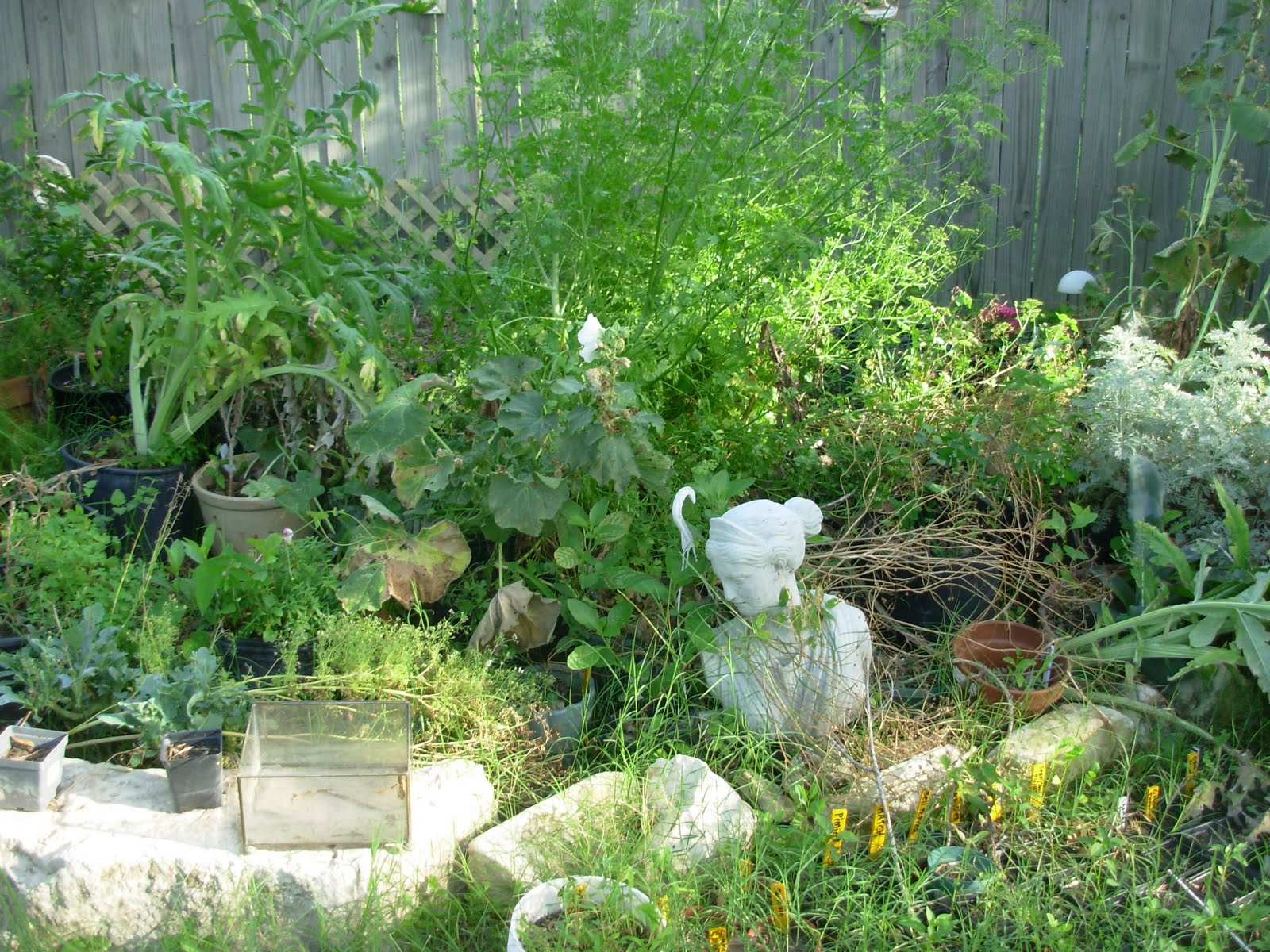
So I have gotten some questions about a comment I made in a recent blog posting about how I garden, and grow cilantro, rue, and other Roman herbs. Just as eating, and classical history are interests of mine, I also enjoy gardening, and my garden is actually Roman themed. Therefore, I thought I'd share some pictures of my garden. 
 Enjoy!

Some Roman artwork
An Obelisk

Some herbs- cilantro, mint, basil, chives, thyme, hyssop & rue.
Greek seals
Iris, Ghost peppers, and lavender
Mints, dusty miller, rue, and horseradish, with my rain catching system in the background.
My obelisk amongst the cacti
Apollo's bust
Another bust
Anyone know who this is?

McRoman’s Happy Meal: Fast Food in Ancient Rome (1st C AD)


McRoman’s Happy Meal: Fast Food in Ancient Rome (1st C AD)

By: The Scribe on August, 2007


While it’s often thought that fast food was a modern invention of a society bent on immediate gratification… well, that theory can now be placed to rest. A study on the remains found at Pompeii has revealed that, more often than not, ancient Romans ate their food while “on the run”.

Although the concept of Roman fast food eateries has been around for awhile, after excavating an entire city block from Pompeii, archaeologists realized that the distinct lack of tableware, formal dining areas, or even full kitchens in Roman homes seems to indicate that cooking – and eating together as a family – wasn’t necessarily at the forefront of ancient Roman concerns. Instead, isolated plates in various corners of the homes turned up, even in places that were previously thought to be unrelated to eating, such as in the bedroom.

This seems similar to how today’s children and adults will take a plate of food into another area of the home while working on something else, instead of always sitting down at the kitchen table to eat. In fact, many of the homes also contained mini-barbeque style implements, which would have certainly allowed someone to cook their meat faster and could eat it on the go.


In addition, there are literally remains of fast food restaurants from Pompeii. These places resemble something like a cross between McDonald’s and a British Pub, in the sense that you could purchase both food and alcohol, and could either grab it and go or sit down at little tables inside the eatery. These fast food places were open to the street, and had a large counter area with a reception area in the middle where the food and drink would be served.

Another ancient Roman fast food joint.

Then, if you wanted, you could sit down at one of the picnic-style tables and quickly munch down your bread and hot sausage (with cheese!), or carry it off as you went about your business – or perhaps bring the food back home for the family, if the wife didn’t want to cook that evening. And while it may seem strange to think that people in ancient times could support these kinds of establishments, many of the people living in Pompeii specifically were comparatively wealthy – local artisans, shopkeepers, potters, weavers, and so on – and could therefore afford to eat out on a regular basis.

Pompeii was also a bit on the touristy side, attracting people from all over the Roman Empire, which must have helped business along as well – seemingly to the point where individuals could own more than one fast food shop, as there is a known inscription that indicates one man owned over ten “franchises” in Pompeii alone!

A “fast food” stand where Romans could purchase breads and drinks.]

Based on these finds, it is extremely likely that there were also fast food shops elsewhere in the ancient Roman world, however it is doubtful that there were quite as many as there seemed to be in Pompeii. Of course, as much as the Romans liked their fast food, it should be remembered that it was undoubtedly much healthier for them to eat out on a regular basis than the choices offered to the modern consumer these days!

Wednesday, October 6, 2010

ISICIA OMENTATA (a kind of Roman Burgers)


Isicia Omentata
Isicia omentata: pulpam concisam teres cum medulla siliginei in vino infusi. piper, liquamen, si velis, et bacam myrtam extenteratam simul conteres. pusilla isicia formabis, intus nucleis et pipere positis. involuta omento subassabis cum caroeno.

Translation:

Finely cut pulp of pork is ground with the hearts of winterwheat and diluted with wine. Flavor lightly with pepper and broth and if you like add a moderate quantity of myrtle berries also crushed, and after you have added crushed nuts and pepper shape the forcemeat into small rolls, wrap these in caul, fry, and serve with wine gravy.

(Apicius, 2, 1, 7)  
Ingredients: 
------------

500g minced meat
1 French roll, soaked in white wine 
1/2 tsp freshly ground pepper 
50ml Liquamen 
(can be replaced by 
1/2 tsp salt and a little white wine) 
some stone-pine kernels 
green peppercorns
a little Caroenum 
Baking foil  
Instructions: 
------------- 
Mix minced meat with the soaked french roll. 
Ground spices and mix into the meat. 
Form small burgers and put pine kernels and peppercorns into them. 
Put them into baking foil and grill them together with Caroenum.


http://www.cs.cmu.edu/~mjw/recipes/ethnic/historical/ant-rom-coll.html#3